top of page

French title: Performance du taux d'interleukine 18 (IL-18) sérique pour la surveillance des patients atteints de fièvre méditerranéenne familiale.

First author: Inès Elhani

Journal: The Journal of Allergy and Clinical Immunology: In Practice (JACIP)

Article traduit par le Dr Catherine Grandpeix-Guyodo


Performance du taux d’interleukine 18 (IL-18) sérique pour la surveillance des patients atteints de Fièvre Méditerranéenne Familiale


Introduction:

Inflammasome activation in Familial Mediterranean Fever (FMF) leads to increased secretion of interleukin (IL)-1β and IL-18. Monitoring FMF activity is essential due to the risk of AA amyloidosis in cases of prolonged inflammation and is classically done using CRP and SAA (serum amyloid A protein), whose values may be dissociated. This study investigated the possibility of monitoring FMF activity through total blood IL-18 assay.

Patients and methods:

This monocentric, retrospective study involved adult FMF patients who had at least one total blood IL-18 assay during their follow-up between 2022 and 2024. The data collected included the mutational status of the MEFV gene, CRP and SAA values, disease activity (considered controlled if fewer than 2 flares per year / uncontrolled if 2 or more flares per year), and finally the total IL-18 assay(s) performed during follow-up consultations (routine care).

Results:

Among 208 sampled patients, half had controlled FMF, and a total of 308 IL-18 assays were analyzable with a median measurement of 922.25 pg/mL (N < 350 pg/mL). Among patients with controlled FMF, IL-18 levels were significantly higher in homozygous patients compared to compound heterozygotes and heterozygotes.

Some patients had IL-18 assays when FMF was inactive and active, and levels showed no significant difference.

IL-18 levels were not significantly different in patients treated with anti-IL-1.

Assays > 7,000 pg/mL concerned 16 patients who had adherence issues with their colchicine treatment and rather low dosages (< 2 mg).

Discussion:

Total blood IL-18 levels appear to be correlated with genotype but not with disease activity. The persistence of high IL-18 levels in asymptomatic patients could suggest low-grade activity of the pyrin inflammasome. Very high levels may show that patients are undertreated, but the significance of IL-18 levels in terms of amyloidosis risk remains to be determined if the SAA level is normal.

The limitations of this study are the few samples per patient (generally 1), the retrospective nature, and the absence of evaluation by a disease activity score at the time of sampling.

Conclusion:

The monitoring of total blood IL-18 levels has a role that remains to be defined since it does not seem to reflect either the patient's immediate inflammatory state or FMF activity. Its interest could lie in detecting subclinical inflammatory activity and evaluating treatment adherence. Prospective studies on large cohorts will be necessary to deepen its utility in FMF.
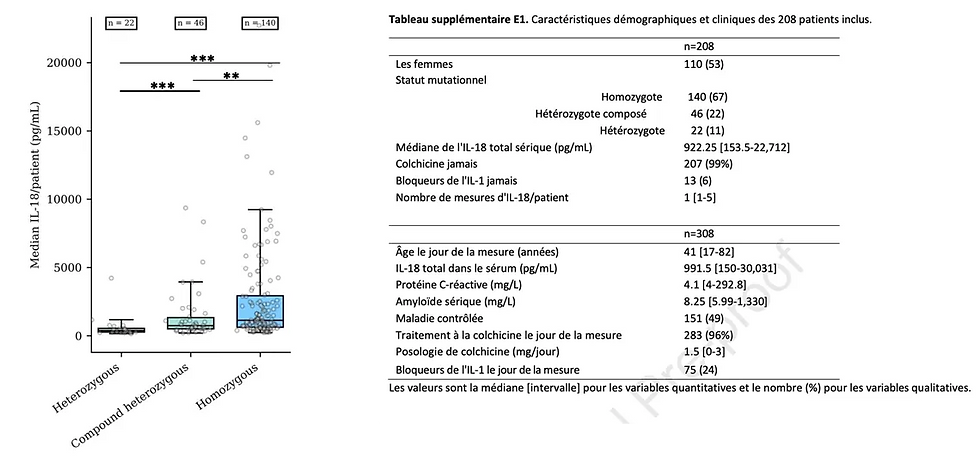

Figure 1. Median IL-18/patient levels according to genotype in patients with familial Mediterranean fever.


Article title: Novel use of interleukin-1 antagonists in male familial Mediterranean

fever patients with infertility: Case series

First author: Bugra Egeli

Journal: Archives of rheumatology

Author of the abstract: Dr. Catherine Grandpeix-Guyodo


Familial Mediterranean Fever and infertility: a possible role of inflammation

Introduction:

The main treatment for familial Mediterranean fever (FMF) is colchicine. Interleukin-1 (IL-1) inhibitors are used in cases of colchicine resistance in FMF.

Fertility disorders with azoospermia or oligospermia have been described in FMF; colchicine is often held responsible but this could be related to chronic inflammation induced by FMF.

Patients and methods: This article reports the cases of 2 men followed for FMF and suffering from infertility who successfully conceived embryos in vitro after stopping colchicine and starting treatment with IL-1 inhibitors.

Results:

Case N°1: A 38-year-old man with FMF, with homozygous M69V mutation of MEFV, treated with 2 mg colchicine/day had failed to conceive for 15 years despite 5 IVF attempts and stopping colchicine after the first 2 IVF. Semen analysis was macroscopically normal, with normal sperm count but decreased motility. Treatment with anakinra (IL-1 RA) was started, resulting in satisfactory semen analysis after 4 months and the obtaining of 2 genetically normal embryos compatible with transfer.


• Case N°2: A 33-year-old man suffering from FMF, with a heterozygous M694V mutation of MEFV, treated with colchicine for 14 years, presented with infertility with azoospermia. The failure of a first IVF under colchicine motivated its discontinuation and the prescription of Canakinumab. Successive sperm analyses showed progressive improvement in sperm motility which allowed, during the 5th IVF, the conception of a child.

Discussion:

These two cases show reversibility of Infertility under IL-1 inhibitors in FMF in 2 men: The introduction of anti-IL1 instead of colchicine allowed improvement in sperm quality in both cases.

Colchicine resistance is suggested as a predictive factor for infertility in FMF patients, suggesting that better control of inflammation may improve it.

Conclusion:

Infertility in men with FMF could be reversible and anti-IL1 could become the treatment of choice in FMF men with fertility disorders.


Article title: Increased risk of psoriatic arthritis in patients with familial Mediterranean fever: a population-based cohort study.

First author: Amir Haddad

Journal: Rheumatology (Oxford)

Author of the abstract: Dr Rim Bourguiba


FMF et rhumatisme psoriasique : un risque plus élevé qu’attendu

Summary


Familial Mediterranean Fever (FMF) is the most common monogenic autoinflammatory disease worldwide. It is associated with mutations in the MEFV gene and characterized by excessive activation of the interleukin-1 (IL-1)β pathway. Psoriatic arthritis (PsA) is a chronic inflammatory disease belonging to the spectrum of spondyloarthritis, whose pathophysiology notably involves the IL-23/IL-17 pathways and Th17 lymphocytes. Data concerning the association between FMF and PsA have remained limited until now.


This retrospective population-based cohort study was conducted using the database of the main Israeli health insurance organization (Clalit Health Services), covering approximately 4.9 million individuals, between 2010 and 2023. The authors identified 9,736 adults with FMF treated with colchicine, with no history of PsA, matched by age and sex to 97,360 non-FMF controls. Participants were followed until the occurrence of PsA, death, or the end of the study period.


The incidence of PsA was significantly higher in FMF patients than in controls (3.26 vs 0.9 per 1,000 person-years). After adjustment for demographic factors and comorbidities, FMF was associated with a more than three-fold increased risk of developing PsA (HR 3.52; 95% CI 2.48–5.0). Other factors independently associated with PsA in FMF patients were age, smoking, and high socioeconomic status. The presence of psoriasis was, as expected, the major predictive factor.


The clinical characteristics and therapeutic strategies of PsA were overall similar in patients with or without FMF, with the exception of more frequent use of targeted synthetic DMARDs in FMF-PsA patients.


These results suggest an increased susceptibility to PsA in FMF patients, possibly related to common immunopathological mechanisms involving IL-1β and Th17 activation. They highlight the need for increased clinical vigilance regarding inflammatory joint manifestations in FMF patients.


In practice, this work encourages active screening for symptoms suggestive of psoriatic arthritis (persistent joint pain, enthesitis, dactylitis) in patients with FMF, particularly in cases of psoriasis or associated risk factors.


bottom of page